Systems Thinking · Design ResearchSponsored Workshop · T-Hub Hyderabad
when a city modernizes, whose story gets left behind?
Designing an Indian-Contexted Identity for Hyderabad's Smart City Future
A 6-person systems design team was sponsored by T-Hub Hyderabad to explore what "smart" actually means for a city — and to design an intervention that keeps a city's culture from getting erased in the process of modernizing it.
Role
Research, Systems Mapping & Concept Design
Team
6 designers
Duration
2–4 Weeks
Sponsor
T-Hub Hyderabad
Systems ThinkingService DesignDesign ResearchDonella Meadows Leverage PointsFigma
⚡ TL;DR — the story in 30 seconds
Our team was sponsored by T-Hub Hyderabad to study system design — and apply it to the question of what makes a city genuinely "smart." Through mind-mapping, fieldwork, and benchmarking cities like London, New York, Singapore, Amsterdam, and Pondicherry against cautionary cases in China, Delhi, and Mumbai, we found the real gap wasn't technology — it was culture. Hyderabad's old and new halves had drifted apart, and most smart-city plans had no mechanism to carry cultural identity forward. Using Donella Meadows' leverage-points framework to prioritize where to intervene, we designed a system of four concepts — a mobility card, a street-level nostalgia installation, a culture-discovery app, and a food-packaging concept — all built around one aim: creating an Indian-contexted identity for Hyderabad instead of importing a generic one.
8
Cities benchmarked
12
Leverage points analyzed
7
System intervention points
4
Concepts designed
01 — Context
What actually makes a city "smart"?
T-Hub Hyderabad sponsored our team to explore system design as a discipline — understanding its research methodologies and applying them to design a solution effective across multiple levels of a system. We chose to focus that lens on smart cities, and specifically on Hyderabad.
The first thing we had to unlearn was the popular myth: smart cities are not defined by how much technology they apply, but by how efficiently that technology is used to improve how the city actually functions. Technology can be a medium for making a city smart — it isn't the qualifying factor on its own.
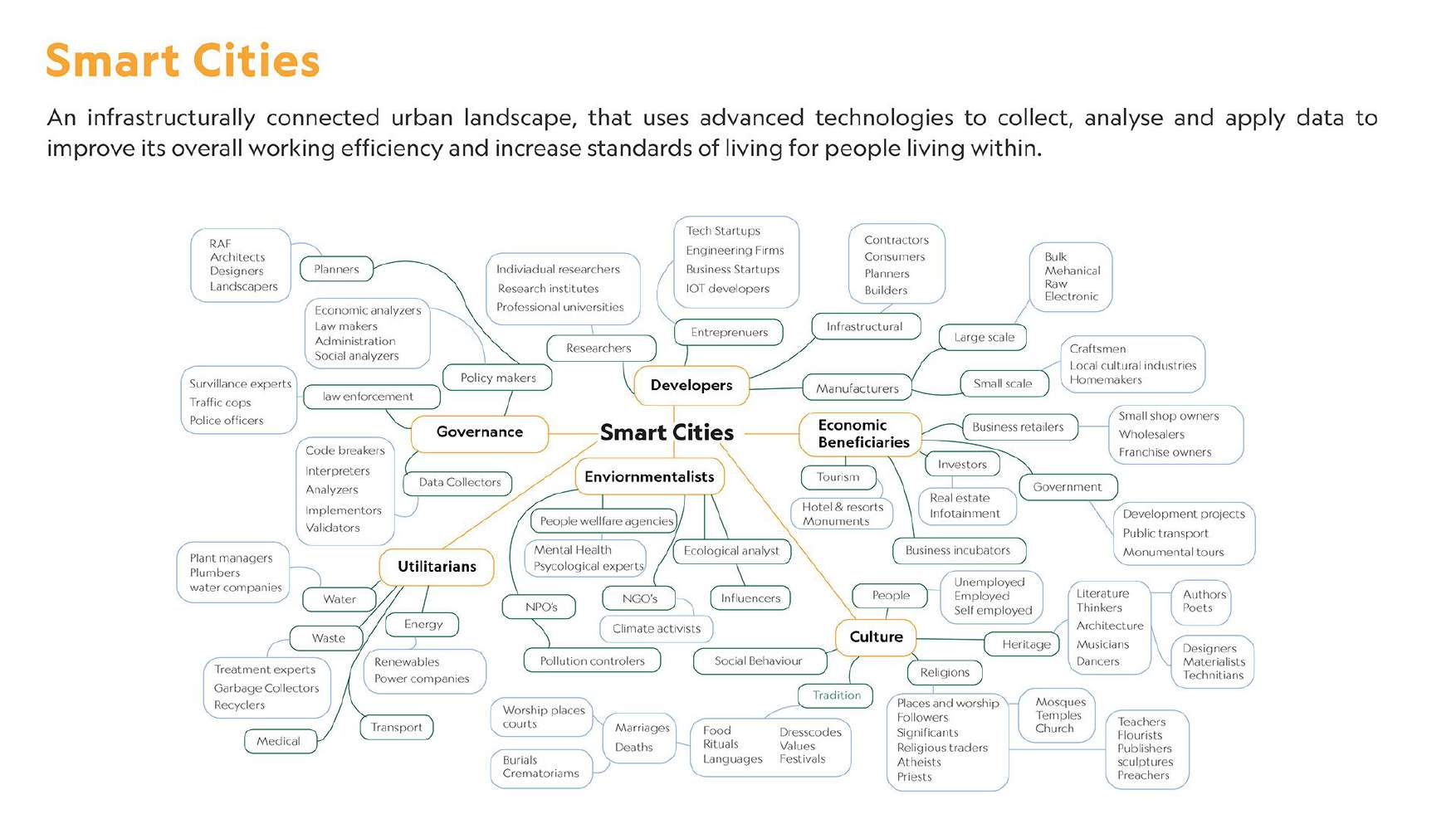
mapping every stakeholder a smart city touches, before deciding where to intervene
02 — The Gap
Two cities that never fully became one
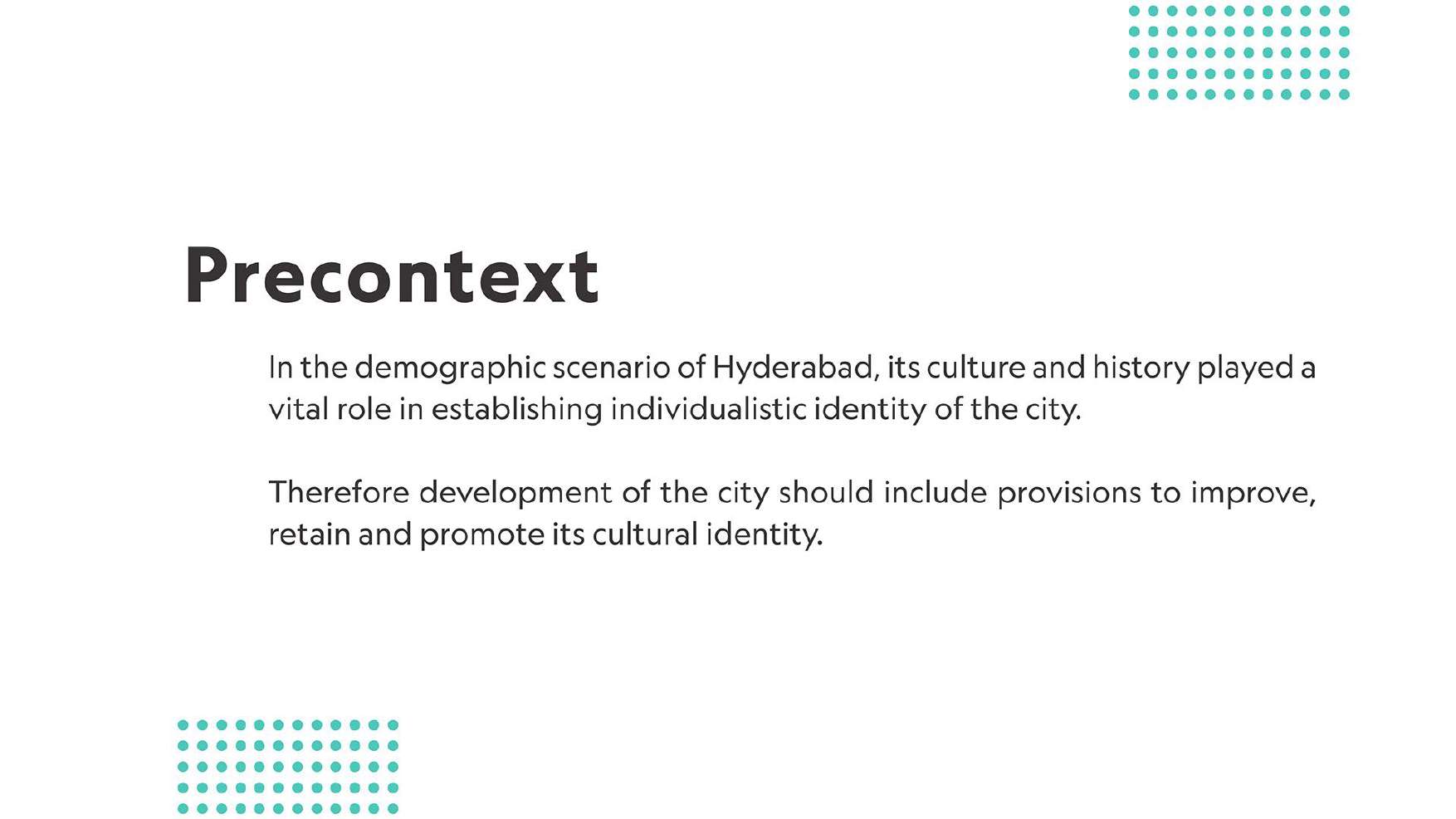
We grounded our focus city, Hyderabad, in its own demographic reality: its culture and history play a vital role in the city's individualistic identity, so any development should include provisions to improve, retain, and promote that identity rather than override it.
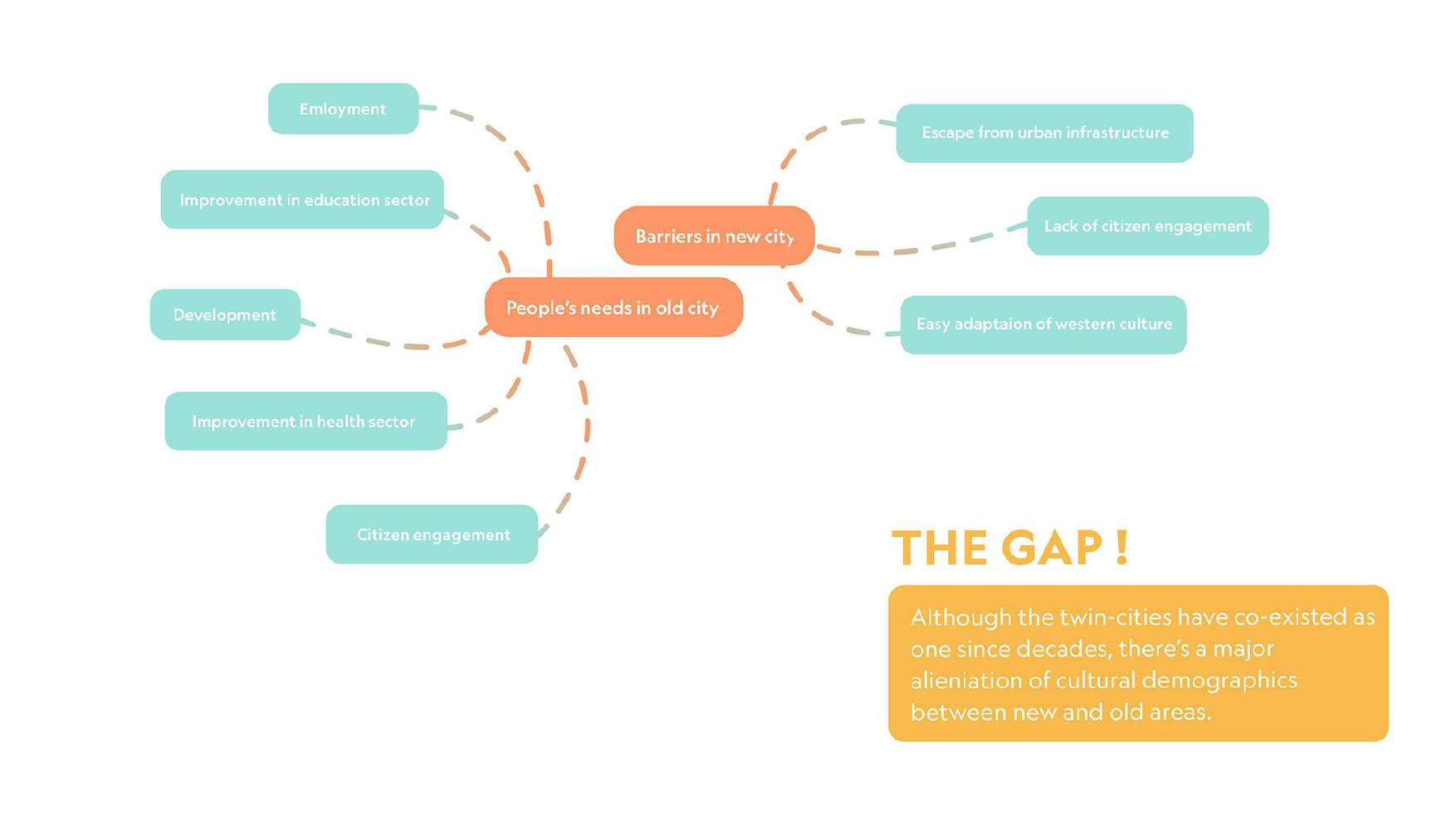
mind-mapping Hyderabad across culture, IT, services, and people
Fieldwork and research surfaced the gap: although Hyderabad's old and new halves have co-existed for decades, there's a major alienation of cultural demographics between them. The old city carries heritage, craft, and tradition; the new city is defined by IT parks, modern residential zones, and a much more Western-influenced lifestyle — and the two rarely meet.
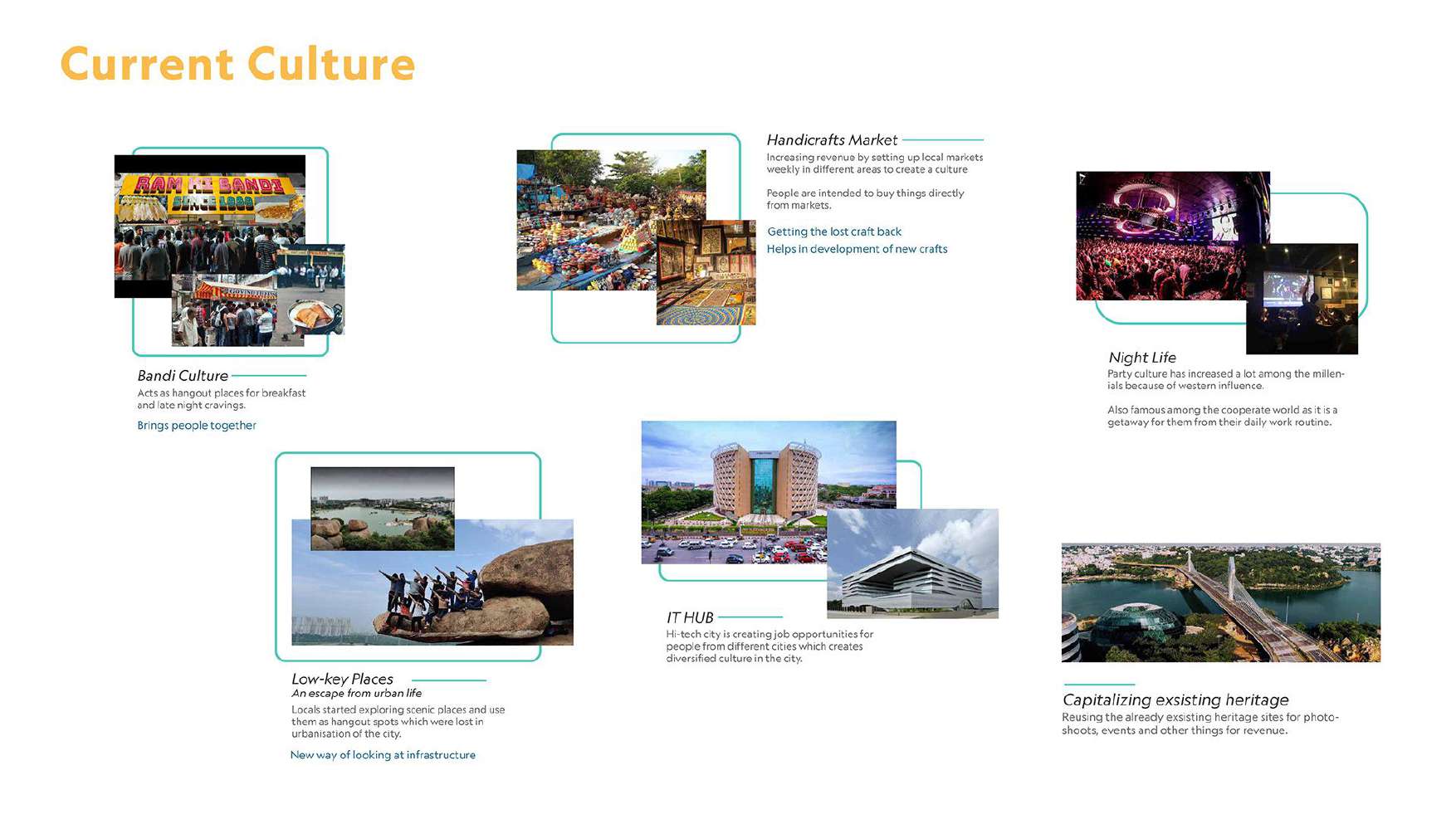
current culture, mapped through fieldwork: bandi culture, handicraft markets, nightlife, the IT hub
03 — My Role
Research, systems mapping, and contributing across every concept
Within our 6-person team (Haider, Kunjal, Joshua, Naushabah, Payal, and myself), I worked across the project rather than owning a single lane. I contributed to the research and systems mapping work — including applying Donella Meadows' leverage-points framework to rank where our team should intervene — and stayed involved through the design of all three concepts we carried to completion: Hyderabad ONE, Hyderabad OUR, and Hyderabad EXO.
04 — Research
Learning from cities that got this right — and cities that didn't
We split our research into two threads: what culture actually means in a smart-city context, and how other cities have handled it — for better or worse.
unpacking "culture" into its component parts before designing for it
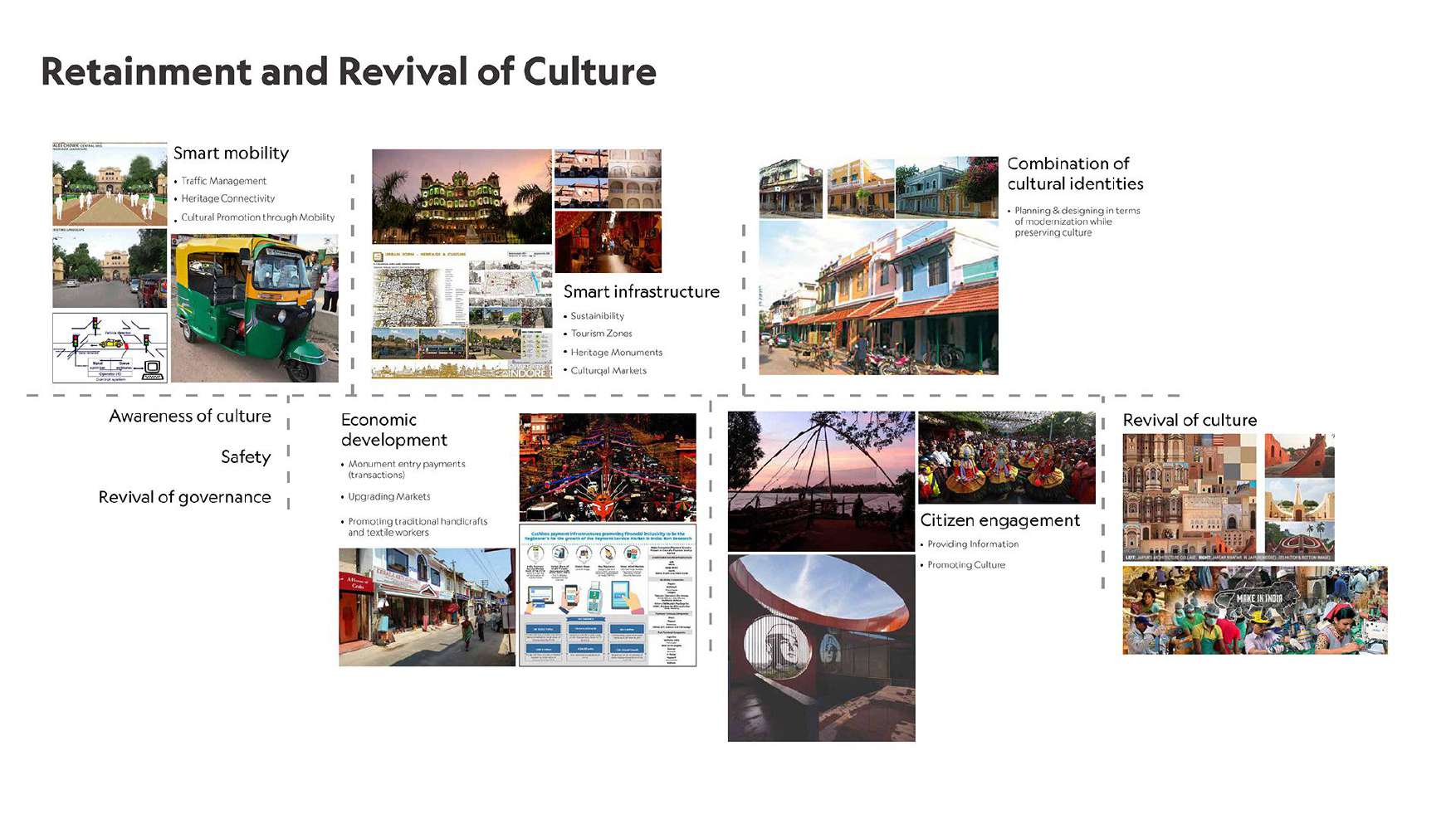
On the positive side, we studied cities that used culture as a deliberate planning tool — London, New York, Singapore, Amsterdam, and Pondicherry — looking at how each retained and promoted cultural heritage while still modernizing.
patterns of cultural retainment and revival, synthesized from five benchmark cities
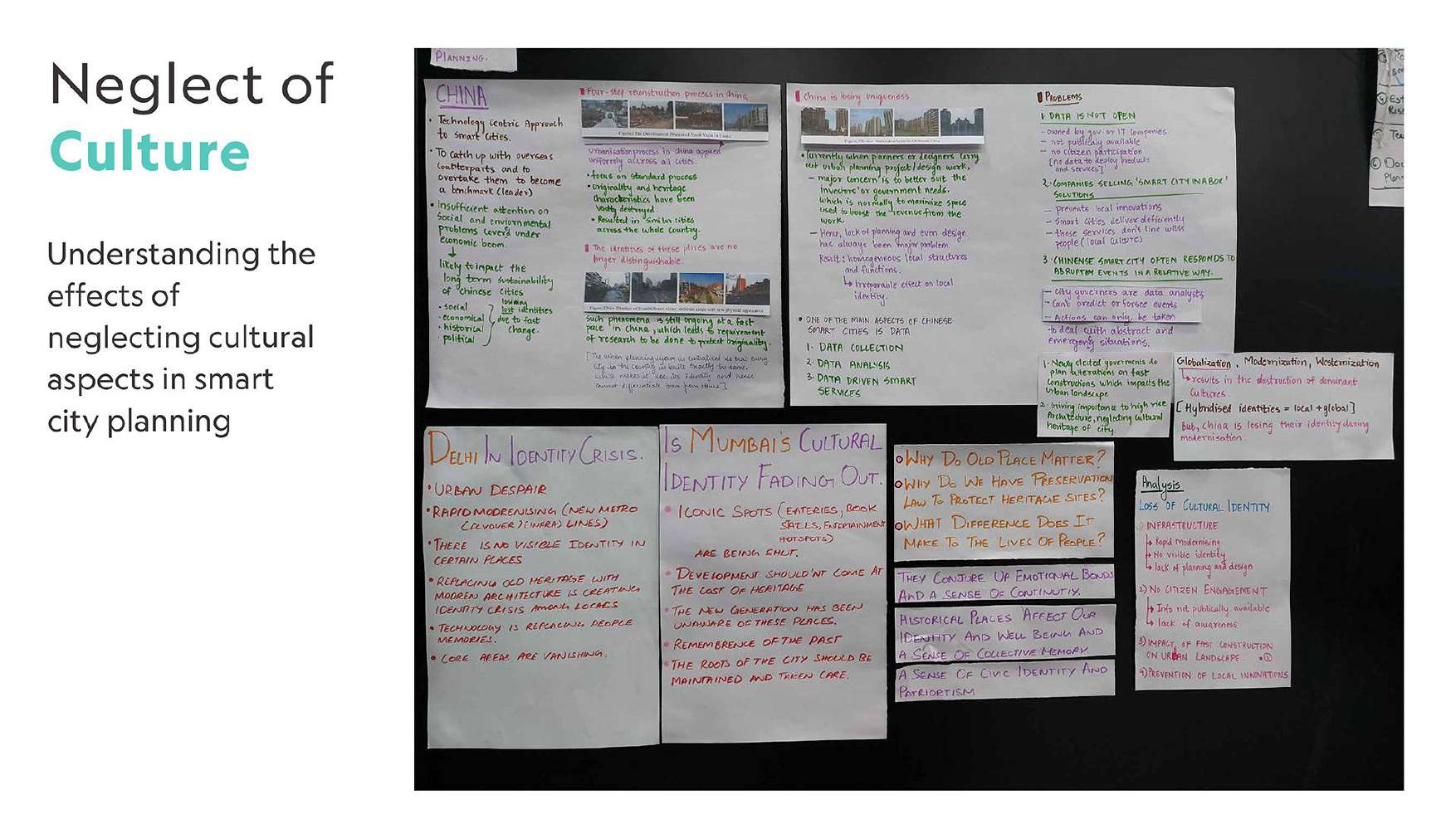
On the cautionary side, we studied what happens when culture is neglected. China's rapid, technology-centric smart-city rollouts produced visually repetitive urban corridors and eroded local identity. Delhi and Mumbai's own modernization raised the same question locally: is the city's cultural identity fading as fast as it's growing?
researching what neglecting culture in smart-city planning actually costs a city
~
Infrastructural repetition
Rapid, unplanned urbanization leads to a loss of visual and architectural identity.
~
Fast construction
Rising congestion and a shrinking green cover across the city.
~
Lack of citizen engagement
Prevents local innovation and accelerates the decline of intellectual heritage.
~
Data isn't open
In China's case specifically: vendors sell generic "smart city in a box" solutions that don't fit local context.
what neglecting culture in smart-city planning actually produces
05 — Synthesis
Finding the highest-leverage place to intervene
We mapped every opportunity we'd surfaced against the pain points that produced it, then interconnected them to see which opportunities kept recurring across the most connection points.
opportunity mapping — tracing pain points to their highest-connection opportunities
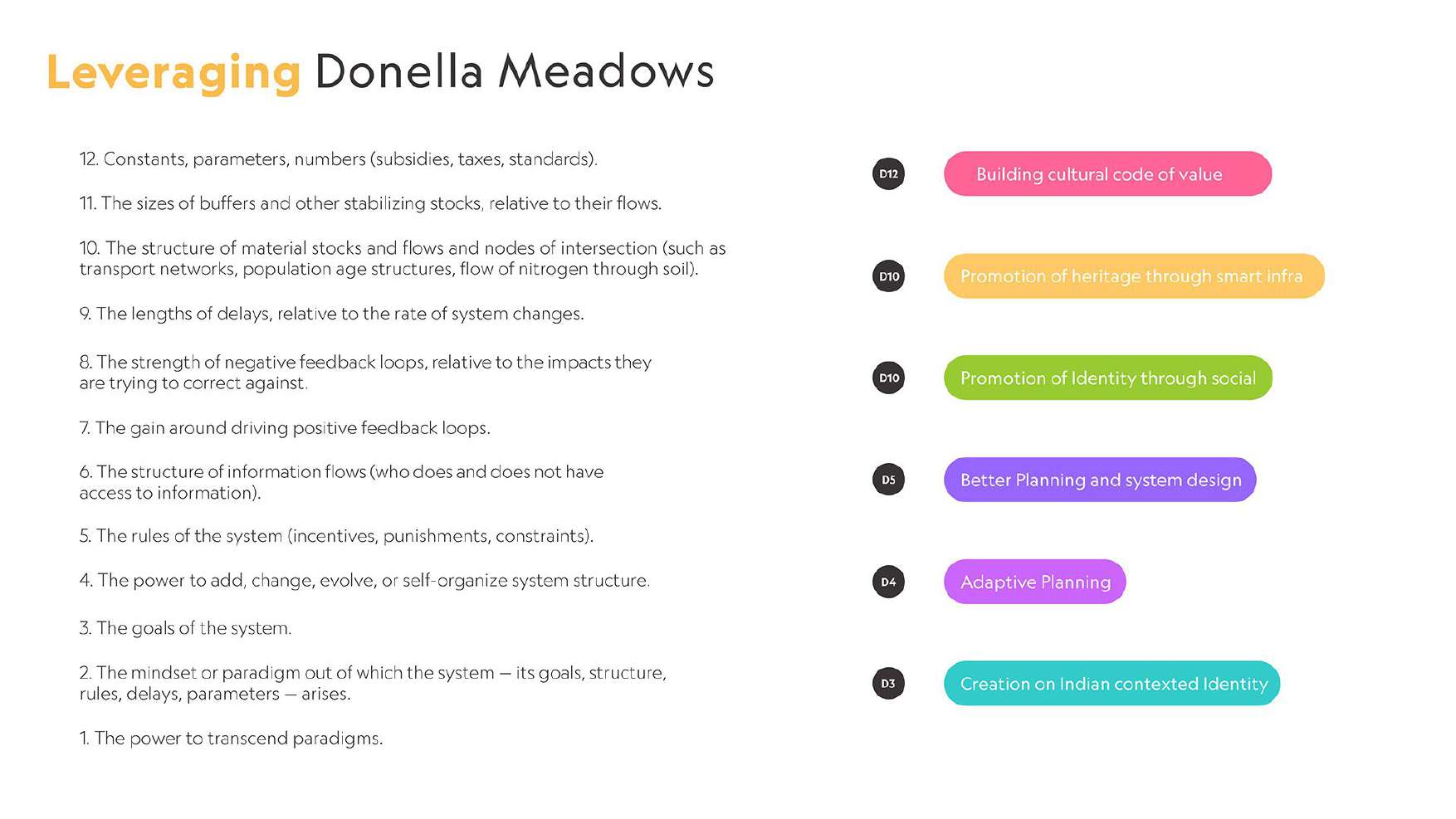
To decide which opportunities were actually worth pursuing, we ranked them using Donella Meadows' 12 places to intervene in a system — prioritizing higher-leverage interventions (like shifting the paradigm or mindset behind city planning) over lower-leverage ones (like adjusting a constant or parameter).
ranking our opportunities against Donella Meadows' leverage-points framework
"Although the twin-cities have co-existed as one for decades, there's a major alienation of cultural demographics between the new and old areas." — the gap that shaped everything downstream
That analysis pointed us to a single final direction: the creation of an Indian-contexted identity for Hyderabad — something distinct from importing a Western smart-city template wholesale.
06 — System Model
Mapping how identity actually flows through a city
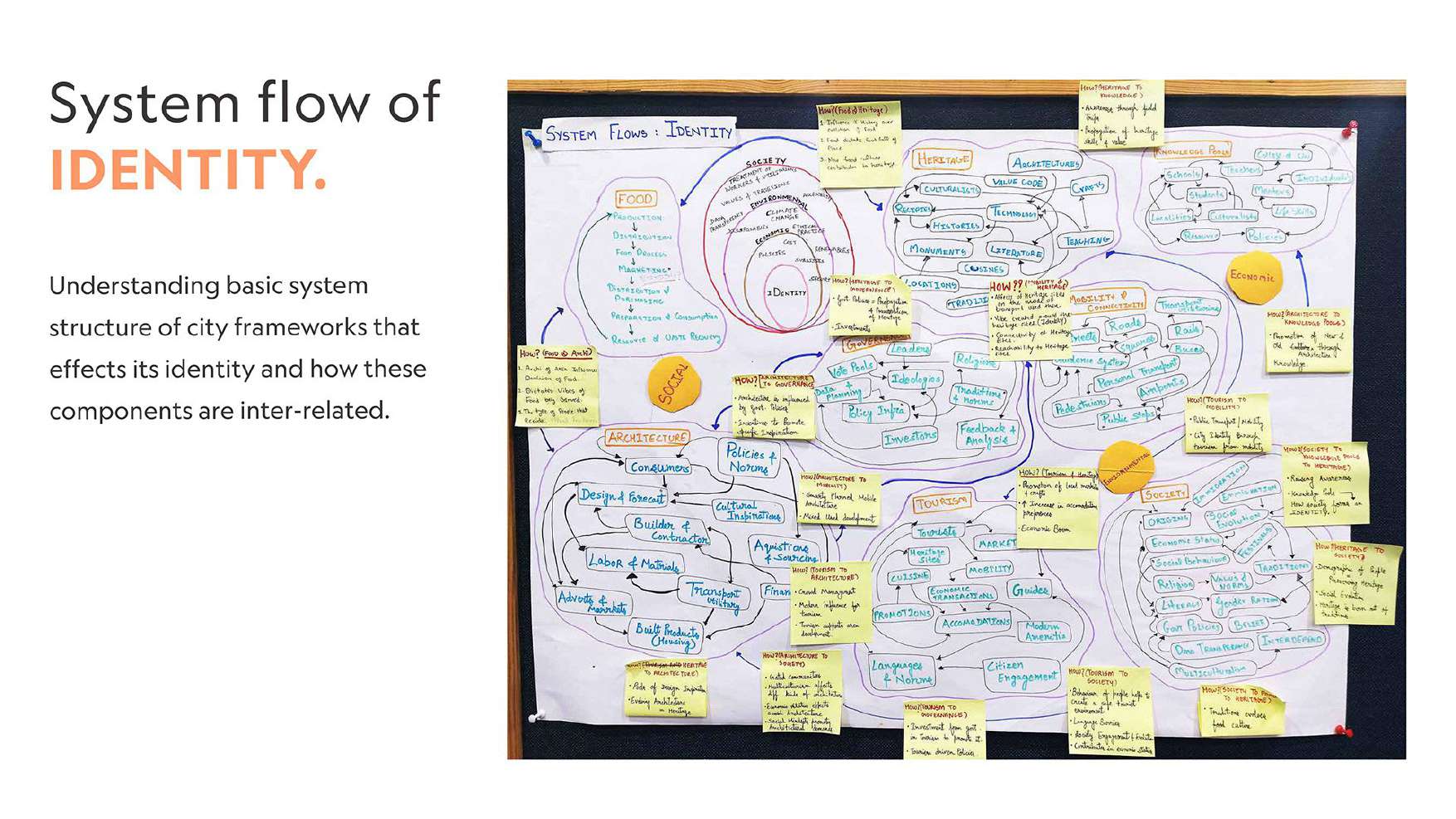
Before designing any single product, we mapped the underlying system: how food, architecture, tourism, mobility, society, governance, and heritage all feed into — and are fed by — a city's sense of identity.
system flow of identity — how these components inter-relate across a city
From that system map, we identified seven concrete intervention points — one lever per subsystem:
Food — Branding
Architecture — Design & Forecast
Tourism — Citizen Engagement
Mobility — Public Transportation
Society — Social Behaviour
Governance — Policy Infrastructure
Heritage — Code of Values
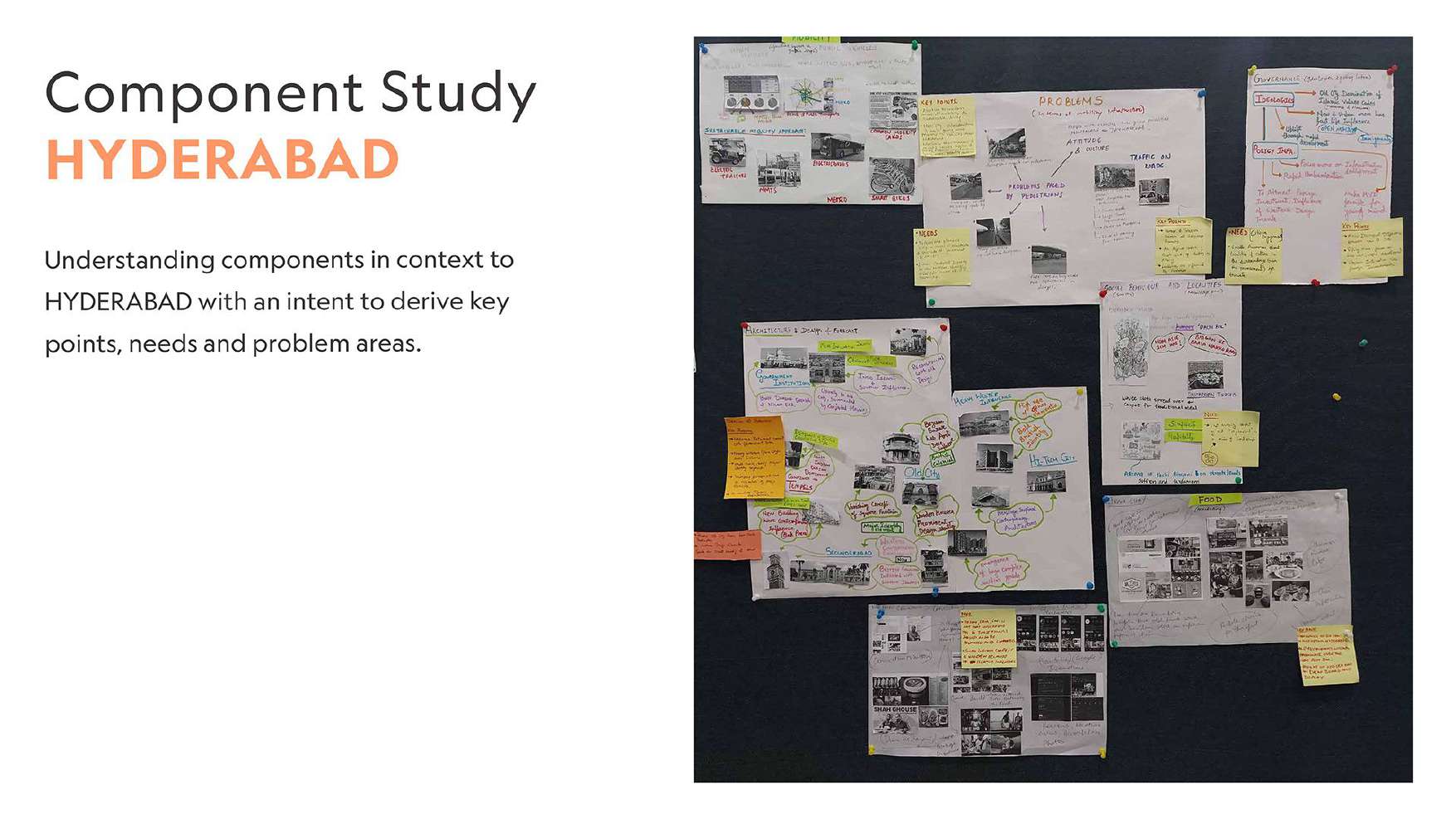
component study — deriving needs and problem areas specific to Hyderabad
07 — Design Solutions
Four concepts, one system of solutions
Mobility, architecture, food, and tourism became the four levers we designed against — each aimed at the same goal of building an Indian-contexted identity for Hyderabad.
the system of solutions — four concepts under one aim
Hyderabad ONEConcept
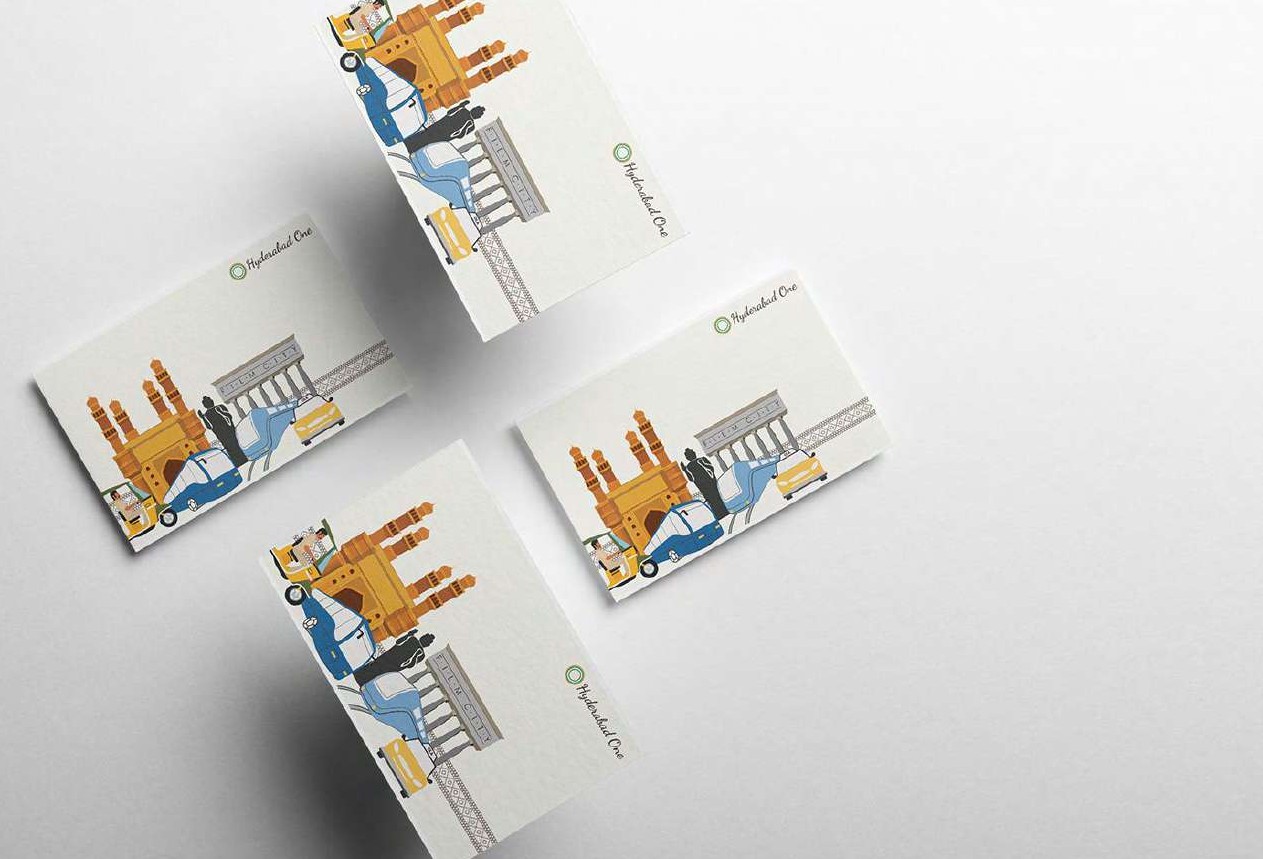
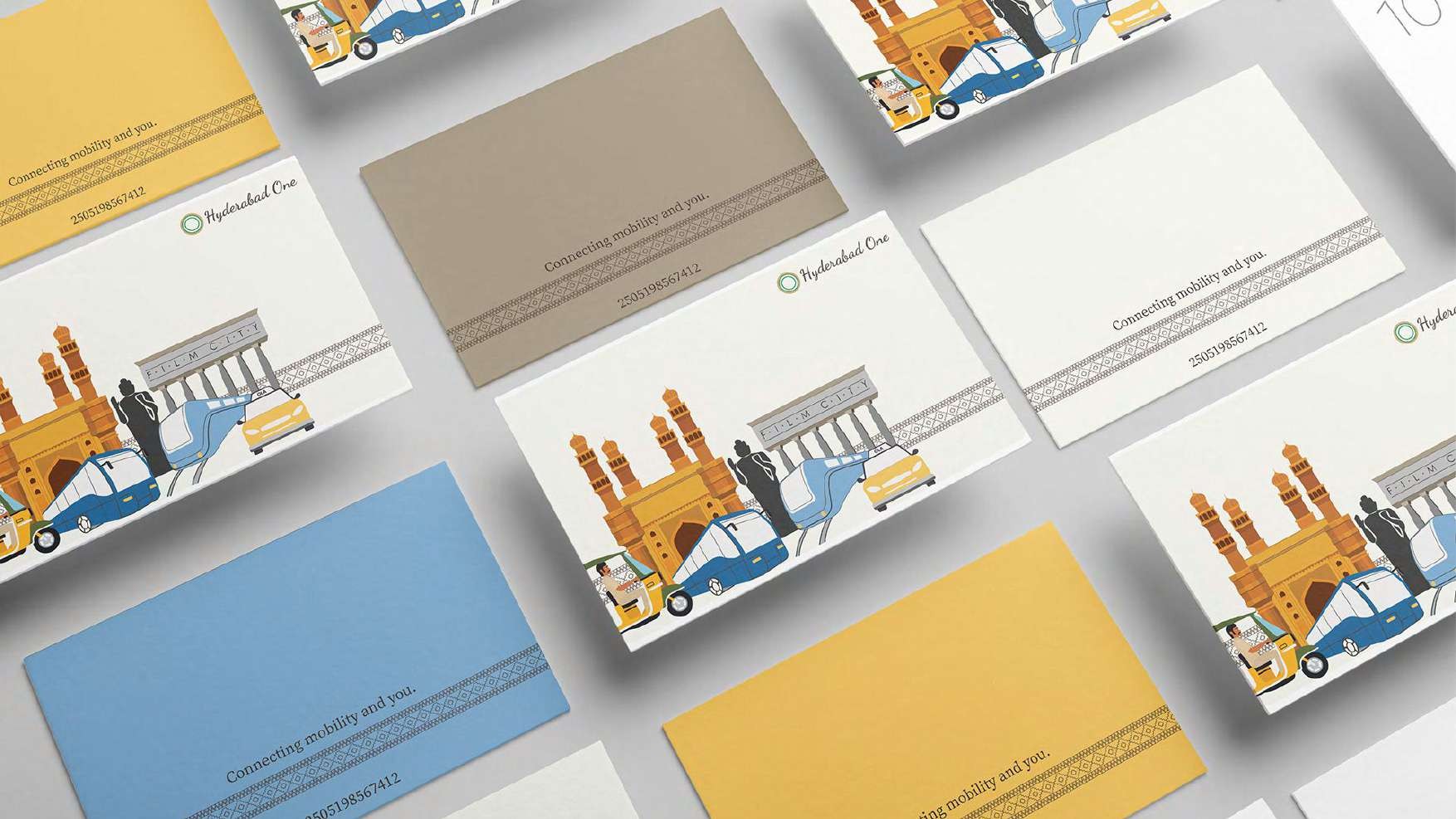
A unified mobility card usable across every public transit service in the city — auto-rickshaws, buses, the metro, and cabs — illustrated in Hyderabad's own visual identity (Charminar, Film City) rather than generic transit branding. While it solves the practical mobility problem, its real job is to make the city's identity part of a daily-use object.
System model: data collection → government policy → financial & mobility services → identity design → manufacturing → distribution through mobility stations → society → mobility services.
Hyderabad OURConcept
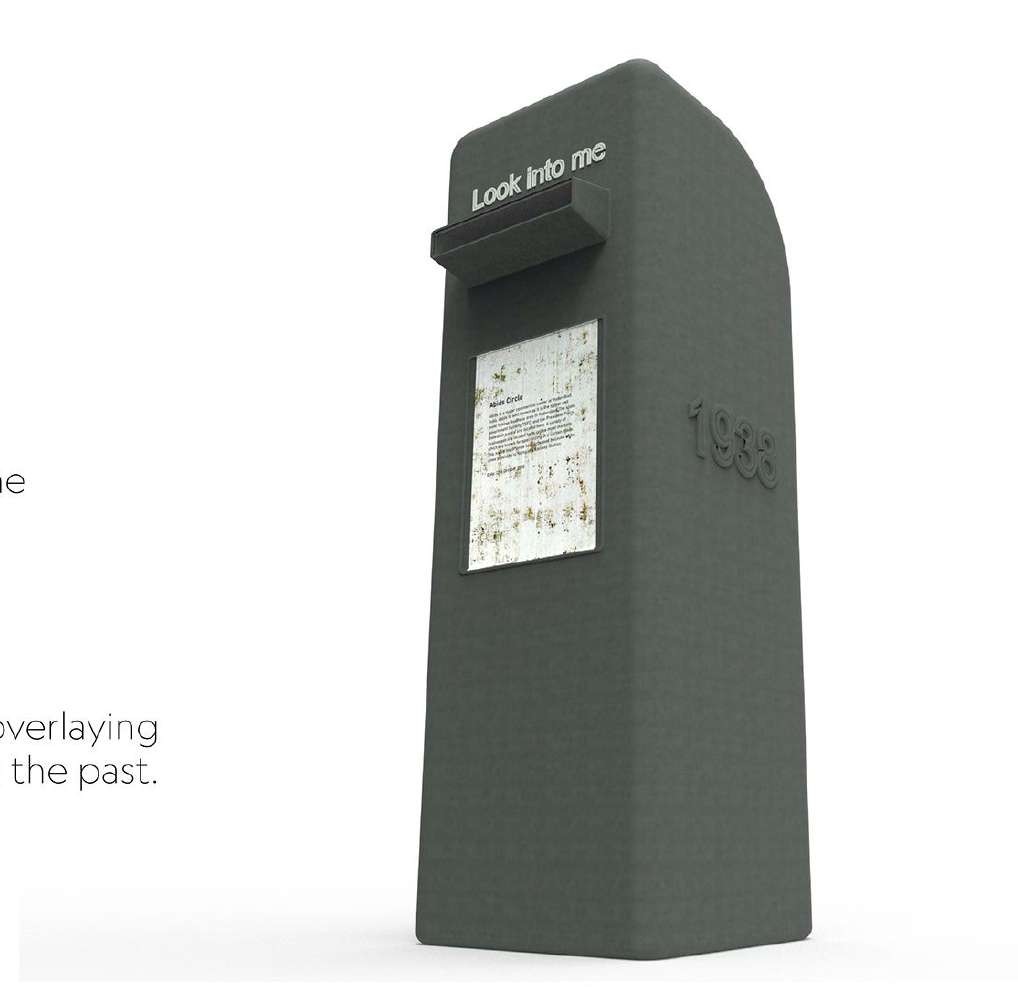
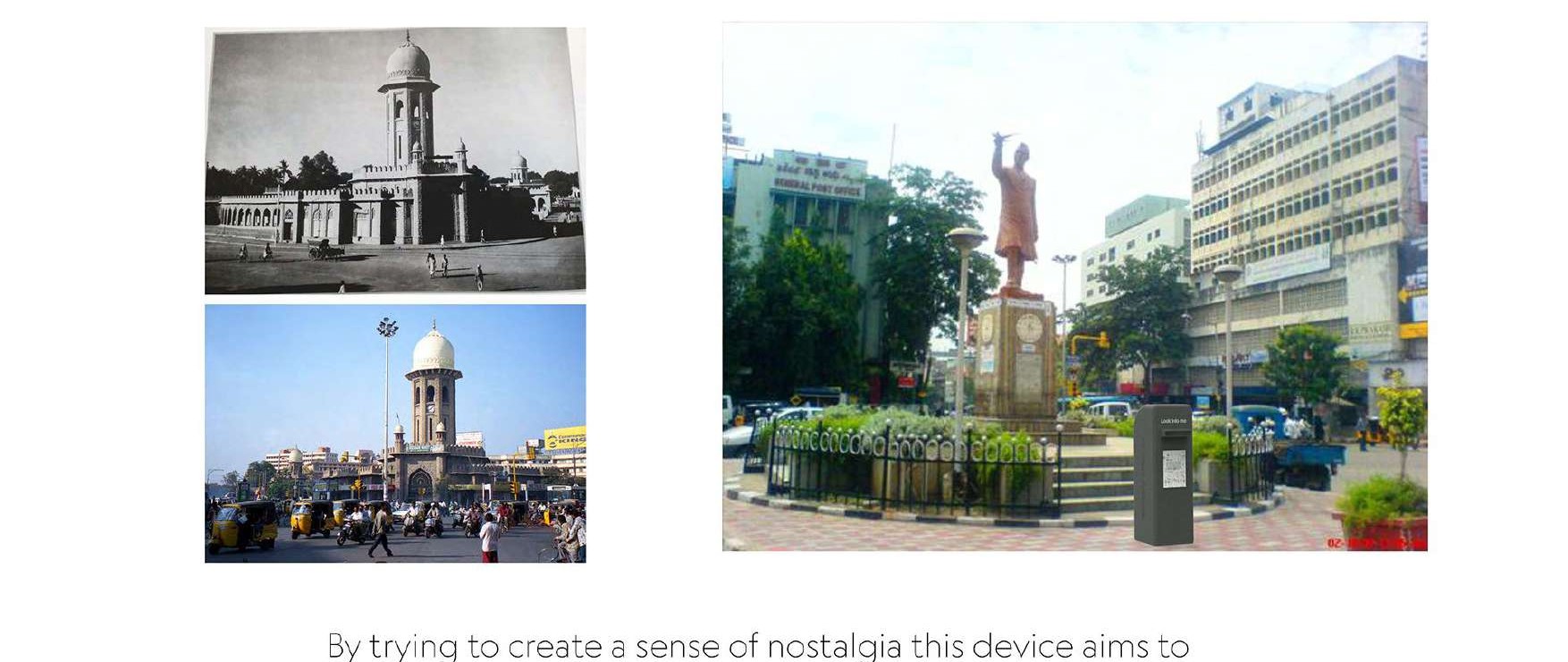
A deliberately crude, monument-like street installation that symbolizes how fast the city around it has changed. Each device carries a "Look into me" panel showing overlaid historical visuals of that exact street, telling a story from the past to whoever stops to look.
By creating a sense of nostalgia, the device aims to shift how people see — and value — the pace of urbanization happening around them.
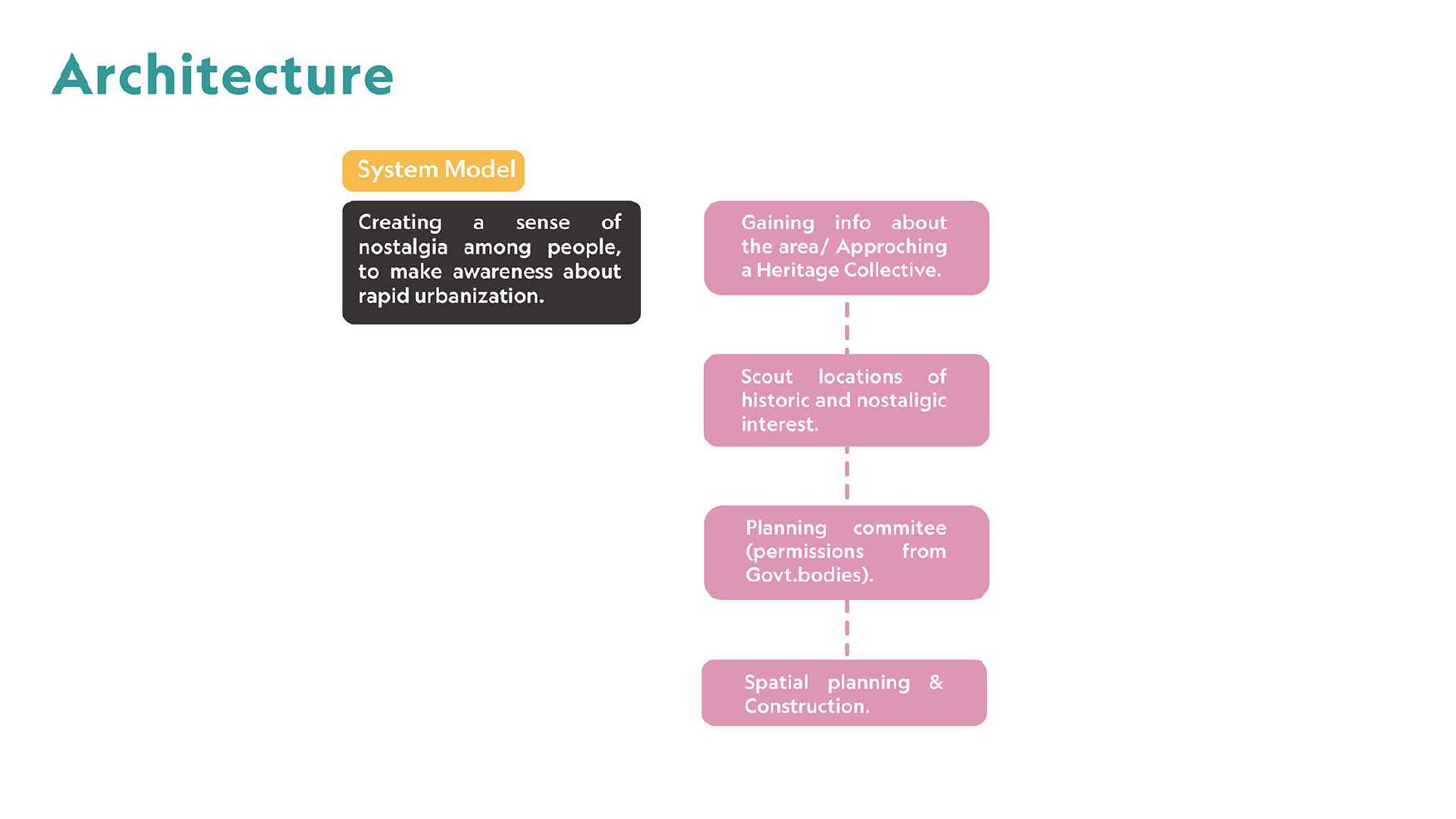
System model: gain information about the area / approach a heritage collective → scout locations of historic and nostalgic interest → planning committee and government permissions → spatial planning & construction.
Hyderabad EXOConcept
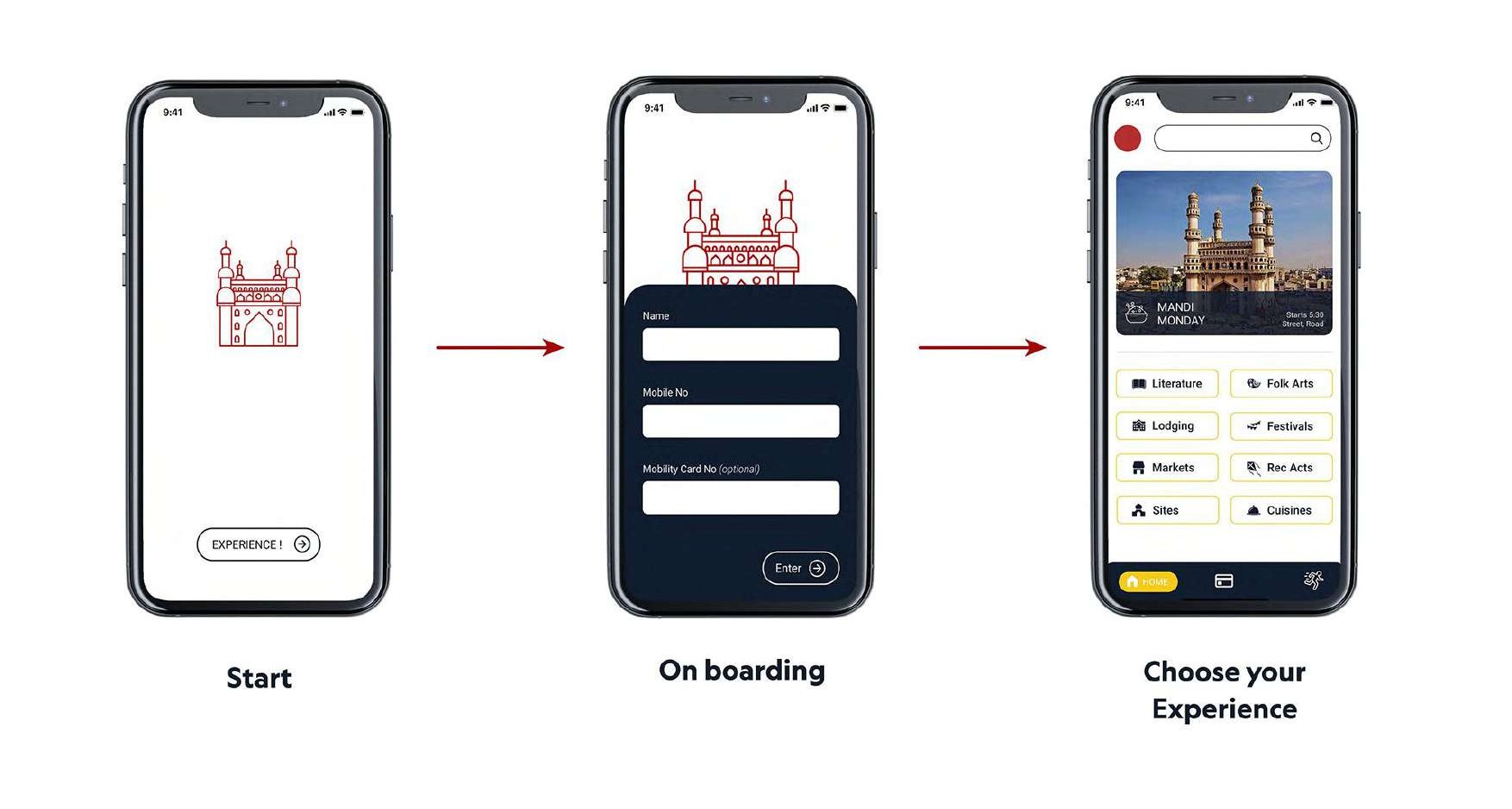
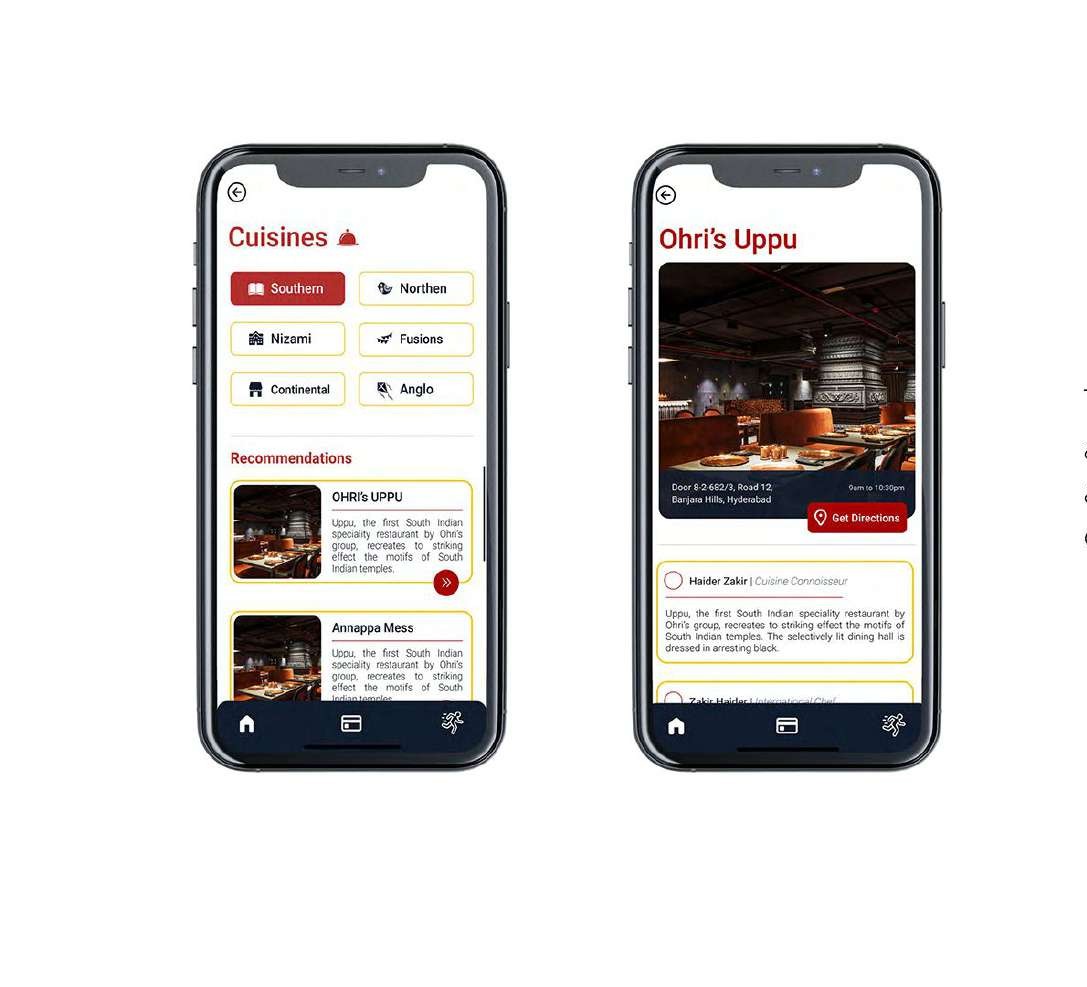
A mobile app built to enhance cultural engagement — letting users experience Hyderabad in its true authenticity rather than a tourist-brochure version of it. Every recommendation — cuisine, markets, festivals, heritage sites — is curated by cultural experts based on firsthand experience and public opinion, not just ratings.
onboarding flow: start → onboarding → choose your experience
cuisine recommendations, curated by cultural experts
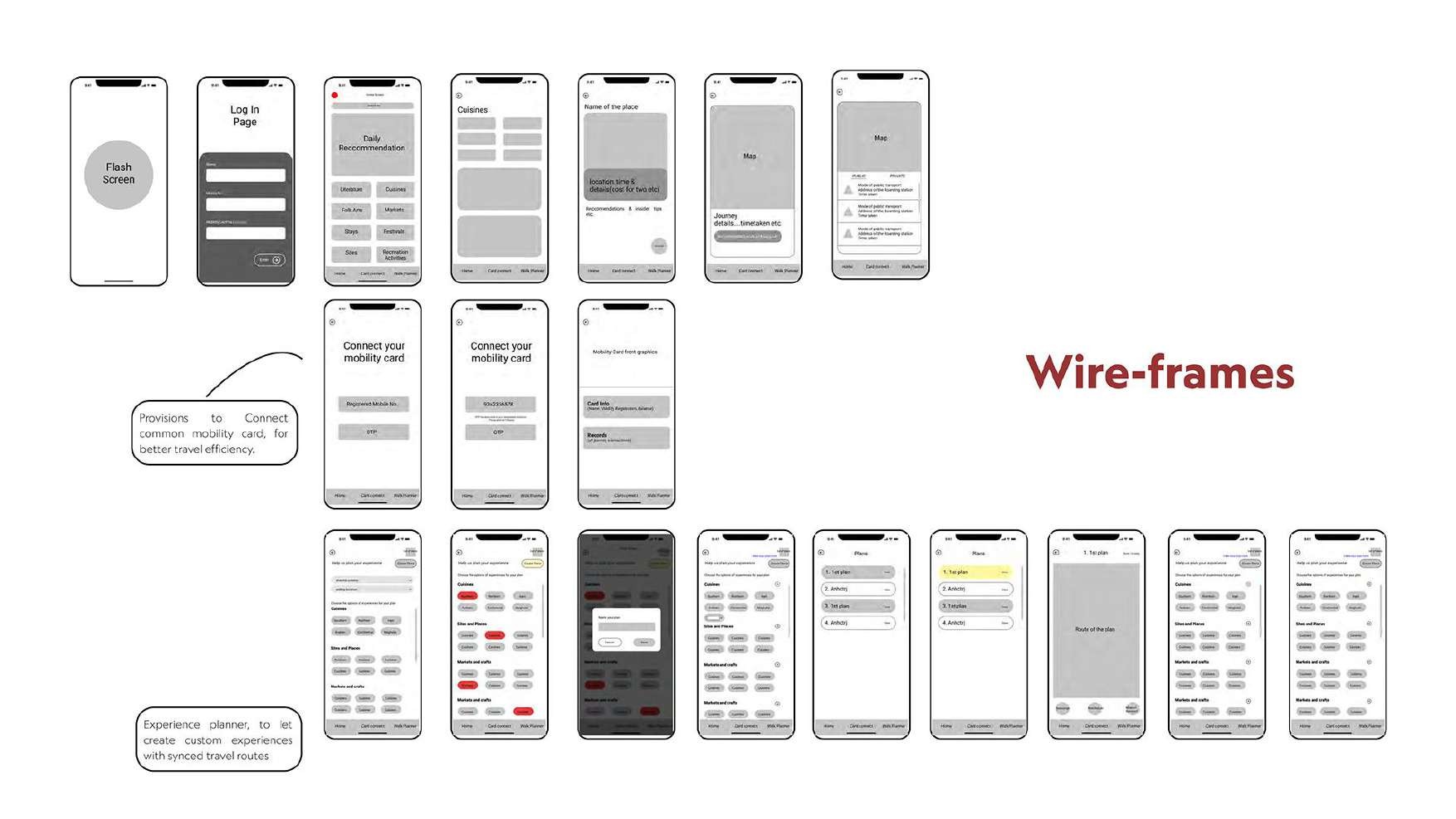
wireframes — including mobility-card linking and a synced-route experience planner
System model: data collection from cultural experts, organizations, and influencers → a personalized experience gathered and vetted first by curators → suggestions ranked by place performance and public opinion → curated experiences surfaced to users to choose from.
Hyderabad EATWork in Progress
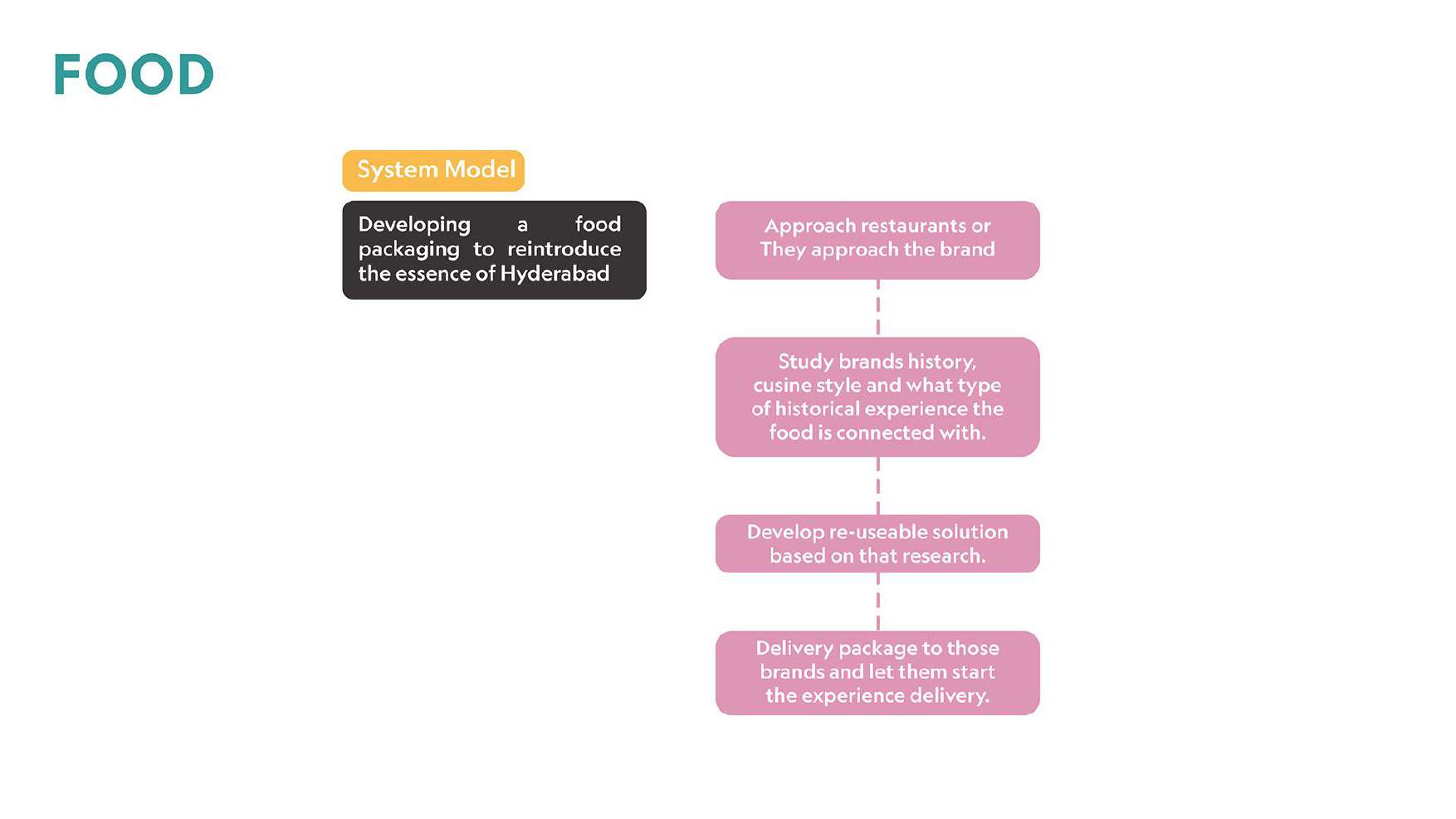
A food-packaging concept designed to reintroduce the essence of Hyderabad into everyday takeaway meals — approaching restaurants (or being approached by them), studying each brand's history and cuisine style, and developing a reusable packaging system tied to that history. This concept was scoped during the workshop but not taken to a finished design.
System model: approach restaurants (or they approach the brand) → study the brand's history, cuisine style, and historical connection → develop a reusable packaging solution from that research → deliver the package and launch the experience.
08 — Reflection
Culture isn't a feature you add later
The biggest shift for me on this project was realizing that culture can't be treated as a layer you add on top of a smart city after the infrastructure is decided — it has to be one of the systems you design for from the start, alongside mobility, governance, and economy.
Using Donella Meadows' leverage-points framework also changed how I evaluate my own ideas: it's easy to gravitate toward the opportunity that's easiest to prototype, but the framework forced our team to ask which intervention would actually shift the system, not just decorate it. That's a lens I've carried into every systems-level project since.
Get in touch
Let's design something meaningful together.
Seeking Summer 2026 design strategy and service design internships. Open to collaborations and conversations.